

How Much Does a House Extension Cost in West Sussex?
If you’re thinking about extending your home in West Sussex, the first question on your mind is probably: what’s this actually going to cost me?
It’s a fair question—and one that deserves a straight answer. The trouble is, extension costs can vary enormously depending on what you’re building, where you’re building it, and how you want it finished.
In this guide, we’ll break down the real numbers you can expect to pay for different types of extensions in West Sussex in 2026, what drives those costs up (or down), and how to budget sensibly for your project.
The Short Answer: What You Can Expect to Pay
Let’s start with some ballpark figures. These are typical costs per square metre for extensions in West Sussex, based on current 2026 pricing:
Disclaimer: All pricing shown reflects common ranges for projects across West Sussex and should be treated as general guidance only.
| Extension Type | Cost Per m² | Typical Total Cost |
| Single-storey rear extension | £2,200 – £3,000 | £45,000 – £80,000 |
| Double-storey extension | £1,800 – £2,600 | £80,000 – £150,000 |
| Side return extension | £2,400 – £3,200 | £35,000 – £65,000 |
| Wrap-around extension | £2,200 – £2,800 | £70,000 – £120,000 |
| Kitchen extension | £2,500 – £3,500 | £50,000 – £90,000 |
These figures include construction, but the final number depends heavily on your specification—which we’ll get into below.
Why Such a Big Range?
You’ve probably noticed those ranges are quite wide. That’s not us being vague—it reflects reality.
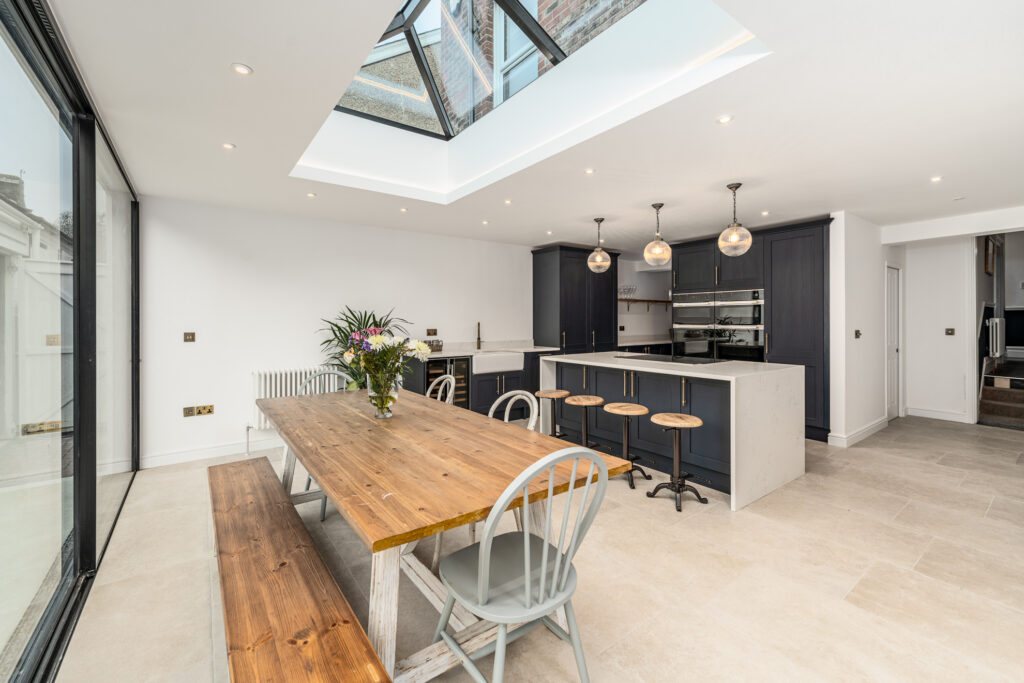
A basic single-storey extension with standard finishes in Littlehampton will cost significantly less than a high-spec kitchen extension in Chichester with bi-fold doors, underfloor heating, and bespoke joinery.
Here are the main factors that push costs up or down:
Size and Complexity
This one’s obvious, but worth stating: bigger extensions cost more. What’s less obvious is that complexity matters as much as size. An extension with multiple corners, changes in roof height, or structural challenges (like building over a drain) will cost more than a straightforward rectangular build of the same footprint.
Specification and Finishes
The difference between “standard” and “high-end” finishes can add 30–50% to your project cost. We’re talking about things like:
- Flooring – Laminate vs engineered oak vs polished concrete
- Windows and doors – Standard aluminium vs slim-frame, triple-glazed units
- Kitchen fit-out – Flat-pack vs German engineered cabinetry
- Heating – Radiators vs underfloor heating
- Lighting – Basic pendants vs integrated LED systems
None of these choices are right or wrong—it’s about what matters to you and what fits your budget.
Ground Conditions
West Sussex has varied geology, from clay soils around Horsham to chalk near the South Downs. If your site needs deeper foundations, piling, or work to manage drainage, that adds cost. A good builder will flag this early, but it’s worth budgeting some contingency.
Access
Can a truck get materials to your property easily? Is there space for a skip and scaffolding? Tight access in towns like Arundel or Petworth can add labour time and cost. It’s one of those things that doesn’t show up in online cost calculators but makes a real difference on the ground.
What’s Included in Extension Costs (And What Isn’t)
When builders quote a price, it typically covers:
- Groundworks and foundations
- Structural work (walls, steels, roof)
- Windows and external doors
- First-fix electrics and plumbing
- Plastering and decoration
- Standard fixtures and fittings
What’s often not included:
- Planning application fees (around £258 for a householder application)
- Architectural drawings (£2,000 – £5,000 depending on complexity)
- Building regulations fees (£500 – £1,000)
- Structural engineer calculations (£400 – £800)
- Kitchen or bathroom units and appliances
- Landscaping and making good the garden
- Furniture and styling
A common mistake is budgeting for the build itself but forgetting these extras. They can easily add £10,000 – £25,000 to your total project cost.
How Location Affects Extension Costs in West Sussex
Building costs in West Sussex tend to run slightly higher than the national average, reflecting the area’s relative affluence and demand for quality tradespeople.
That said, there’s variation within the county:
- Chichester, Midhurst, and the South Downs – Premium end. Higher land values, more conservation areas, and typically higher-spec expectations push costs up.
- Worthing, Littlehampton, and Bognor Regis – More moderate pricing, though still above national averages.
- Horsham and surrounding villages – Strong demand keeps prices competitive but not cheap.
If your property is in a conservation area or near a listed building, you may face additional planning requirements that add time and cost. Always check with your local planning authority early in the process.
Planning Permission: Do You Need It?
Many single-storey rear extensions fall under Permitted Development rights, meaning you won’t need full planning permission. However, there are limits:
- Extensions can’t exceed 4 metres from the original rear wall (or 3 metres for attached houses)
- Maximum height of 4 metres
- No more than half the garden can be covered by buildings
- Materials should match the existing house
If you’re in a conservation area, an Area of Outstanding Natural Beauty (much of the South Downs), or your property has had its permitted development rights removed, you’ll need to apply for planning permission.
Even when permitted development applies, you’ll still need Building Regulations approval. This is non-negotiable and covers structural safety, fire safety, insulation, and drainage.
How to Get Accurate Costs for Your Extension
Online calculators give you a starting point, but the only way to get accurate figures is to:
- Get detailed drawings – Even if you’re not ready to build, having plans drawn up lets builders quote properly rather than guessing.
- Get multiple quotes – Three quotes from reputable builders is a good minimum. Make sure they’re quoting on the same specification.
- Ask what’s included – A lower headline figure isn’t a better deal if it excludes electrics, plastering, or decoration.
- Check previous work – Any builder worth hiring will happily show you completed projects. Better still, put you in touch with previous clients.
- Build in contingency – A 10–15% contingency budget is sensible. Unexpected issues happen on every build—better to be prepared than caught short.
Is an Extension Worth the Investment?
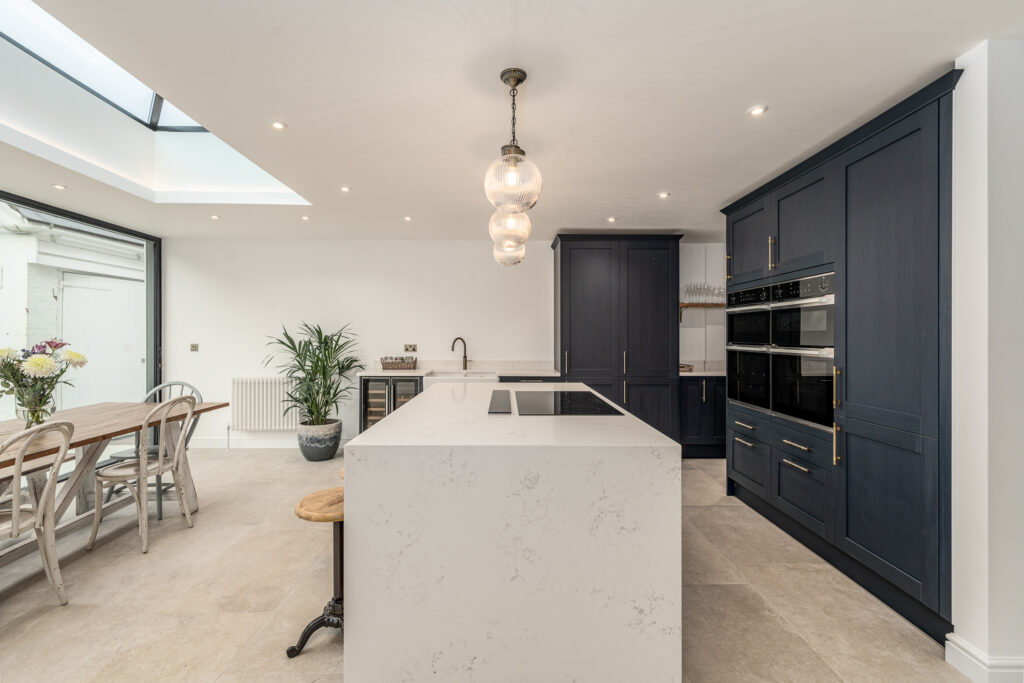
This depends on your goals. If you’re extending to improve your quality of life—more space for a growing family, a proper kitchen, somewhere to work from home—then the value is immediate and personal.
From a financial perspective, a well-designed extension typically adds more value than it costs, provided you don’t over-develop for your area. A £70,000 extension in a street of £400,000 houses will likely add £80,000–£100,000 to your property value. The same extension in a street of £250,000 houses might not return as much.
The best returns tend to come from:
- Adding a bedroom (especially a fourth bedroom)
- Creating open-plan kitchen-diners
- Adding a ground-floor bathroom or utility room
- Improving flow between house and garden
Ready to Start Planning?
Every extension is different, and the best way to understand what yours will cost is to have a proper conversation about what you want to achieve.
If you’re thinking about extending your home in West Sussex, we’re happy to talk through your ideas, visit your property, and give you a realistic sense of costs and timescales—no obligation, no pressure.
Contact the Elite Build West Sussex team to discuss your bespoke and environmentally sustainable build.